Zen in Food
Silpo is one of Ukraine’s largest supermarket chains, known for turning grocery shopping into a more engaging experience. Its loyalty program and mobile app already connect customers’ purchases to their profiles, creating an opportunity for personalized services based on shopping history.
What if eating well didn’t require so much effort?
Every evening after work, I stop by Silpo. It’s my little ritual. But trying to remember what I already have in the fridge and what I should buy is exhausting. So I usually stick to the same safe set: bananas, milk, bread. The same thing every time.
I’m almost thirty, and I know I should probably eat better. But I don’t really know how. I don’t want to count calories or spend time tracking everything I eat. I just want to know what I should buy right now.
So, what if Silpo became your personal nutrition assistant? Silpo already knows a lot about me through my purchase history. So why not use that data?
Imagine walking into the store and getting a simple suggestion: “Today, grab a salad, yogurt, and some chicken fillet.” Small suggestions like this could help people eat better and feel more energized every day.
The guest shops at Silpo and scans their loyalty card.
The app collects previous purchase data and analyzes how varied their diet is.
Based on this data, the guest gets suggestions on what to buy next to make their diet more balanced.
People who feel overwhelmed by hundreds of options in a supermarket.
People who want to eat a more balanced diet.
People who have tried food-tracking apps but got tired of logging everything manually.
Principles of Balanced Nutrition
The concept was developed based on an interview with a nutritionist.
The Harvard Healthy Eating Plate
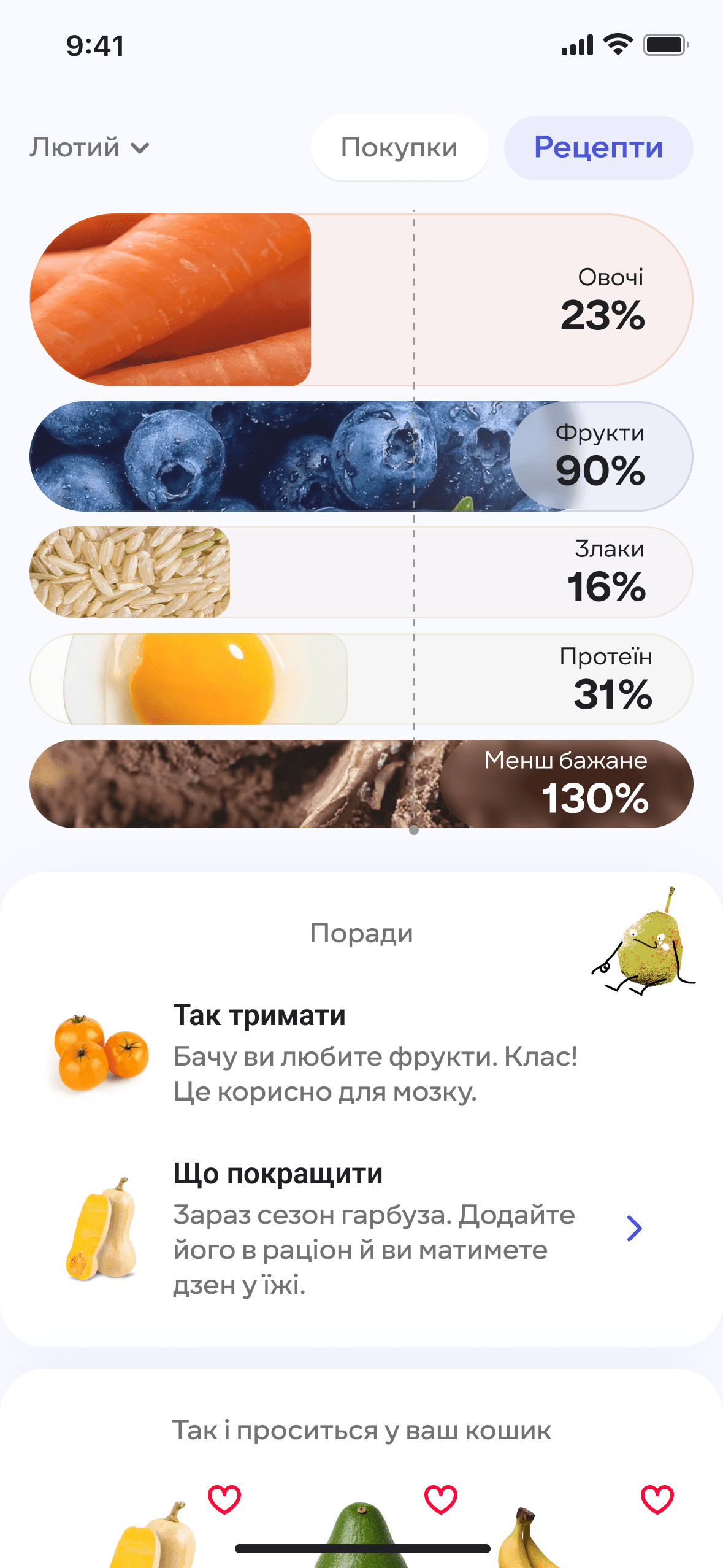
A balanced diet can follow the general principles of the Harvard Healthy Eating Plate: more plant-based foods, fewer animal-based foods, fewer highly processed products, and more variety in both ingredients and colors.
Instead of focusing on exact percentages or tracking protein, fat, and carbs, it can be easier to think in portions. For example, a portion of meat can be roughly the size of your palm.
Variety and color
It’s difficult to know exactly how much magnesium or potassium is in a specific potato because nutritional values vary. That’s why variety matters.
The app helps guests understand whether their diet includes a wide range of foods or whether they keep buying the same products again and again.
Core Value is to get personalized recommendations on what to buy based on your previous purchases.
User Flow

Design Rationale
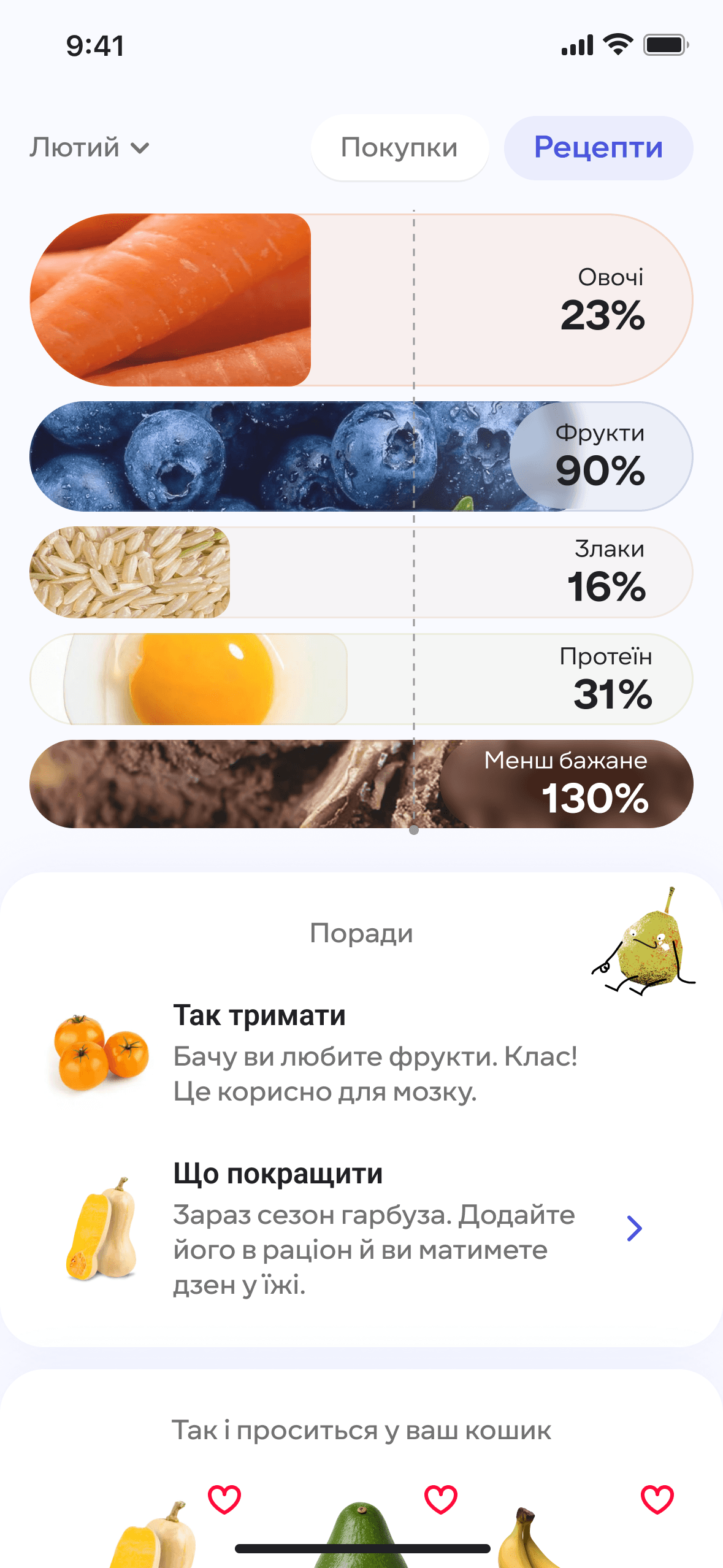
Page job:
Understand what I should buy to make my diet more balanced.
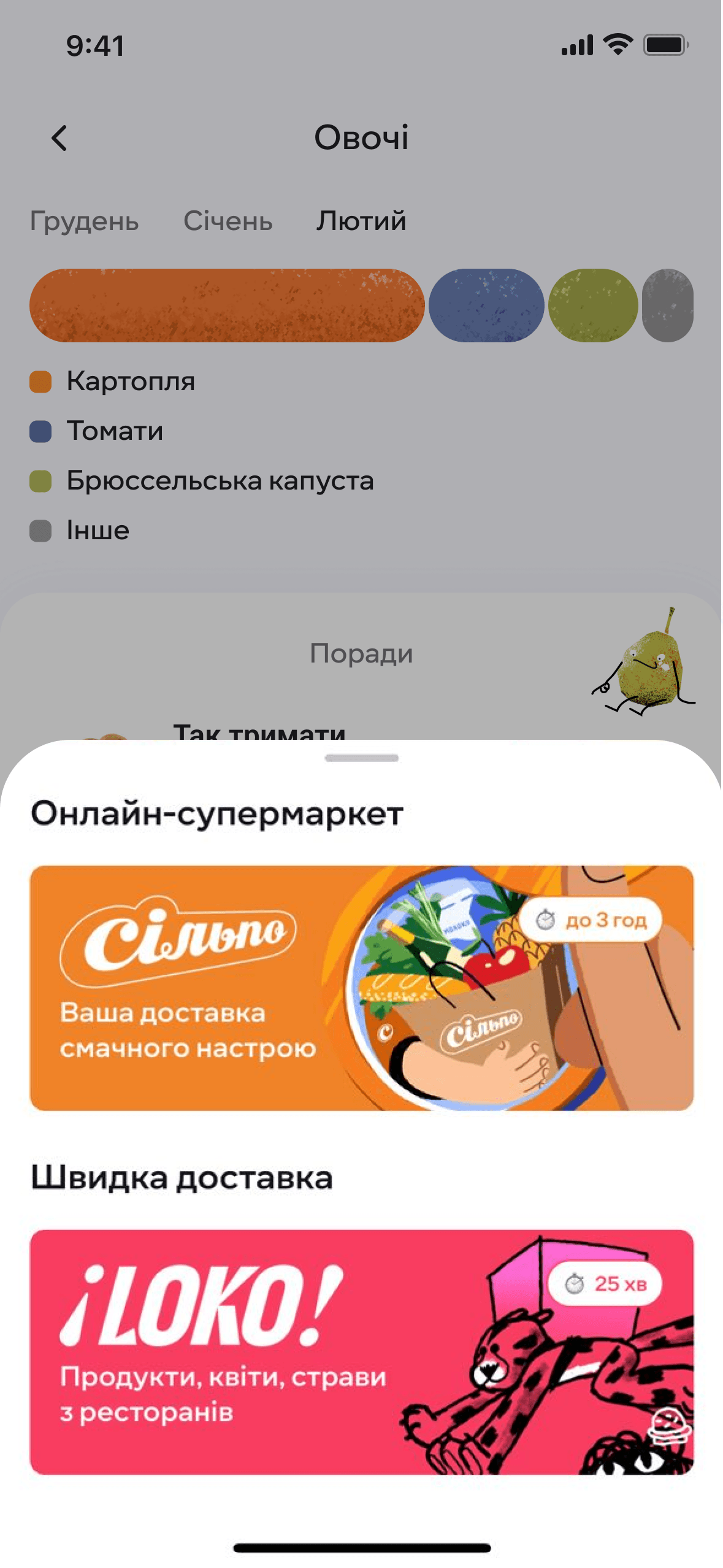
Show the sub-company Loko order suggestion immediately:
This is the main action we want to help the user with, so it makes sense to surface it on the first screen.
Page job:
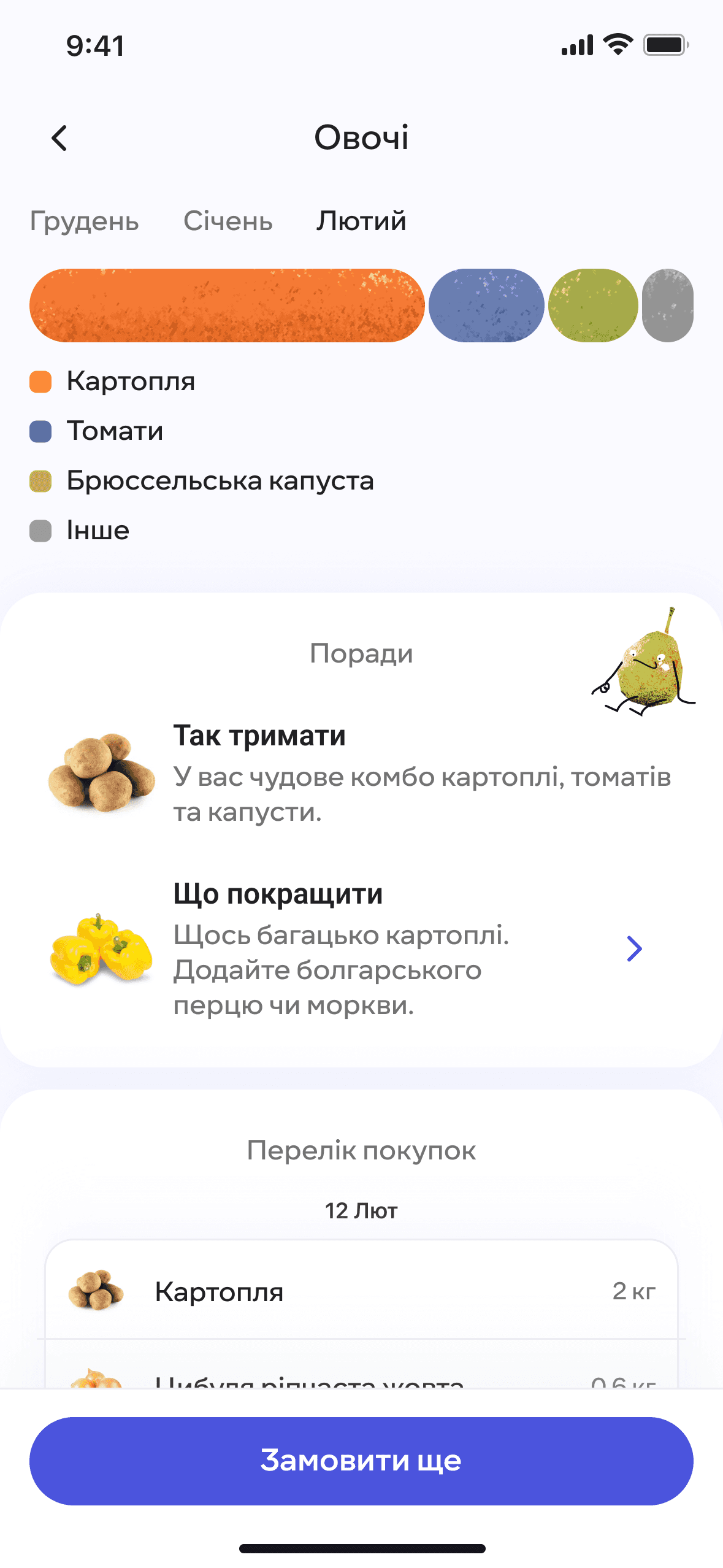
Understand whether I eat a diverse enough range of vegetables and adjust my choices if needed.
Show the balance between key vegetables:
Helps users see whether they are getting enough variety instead of repeatedly buying the same products.
Edit purchases:
Useful when one receipt includes groceries for several people.
Order more from a category:
Lets users quickly add products that could bring more variety to their diet.
Tested Data Visualizations
Hypothesis:
If we show how the guest’s purchases compare with the Harvard Healthy Eating Plate and highlight what is missing, they will understand which foods they consume most and which ones they could add for better balance. This could encourage them to buy the missing products.
Metrics:
Retention rate, average order value.
Research:
I showed several visualization options to 10 people of different ages. I asked how they interpreted each chart and which one felt easiest to understand.
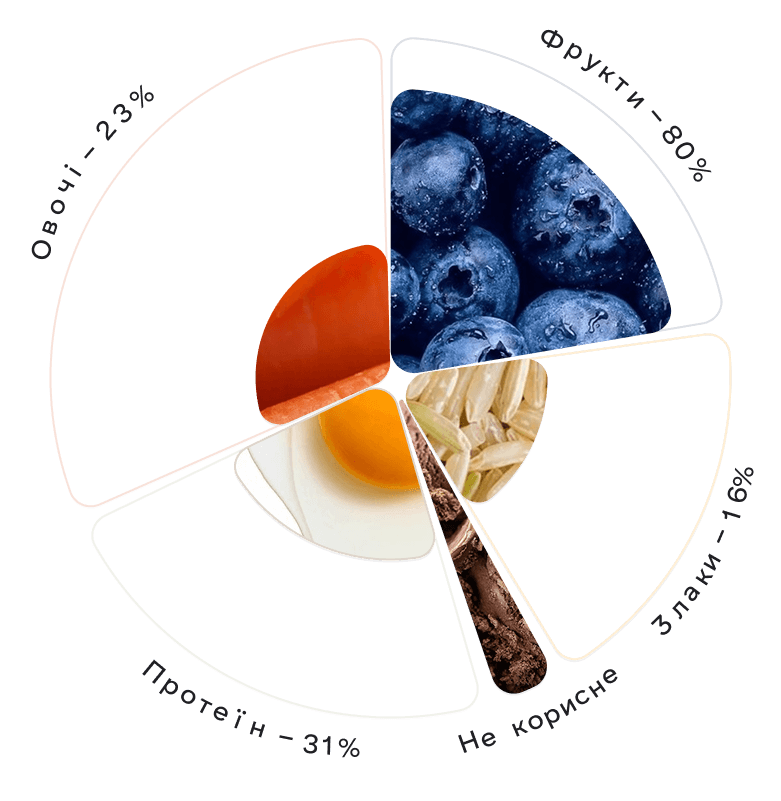
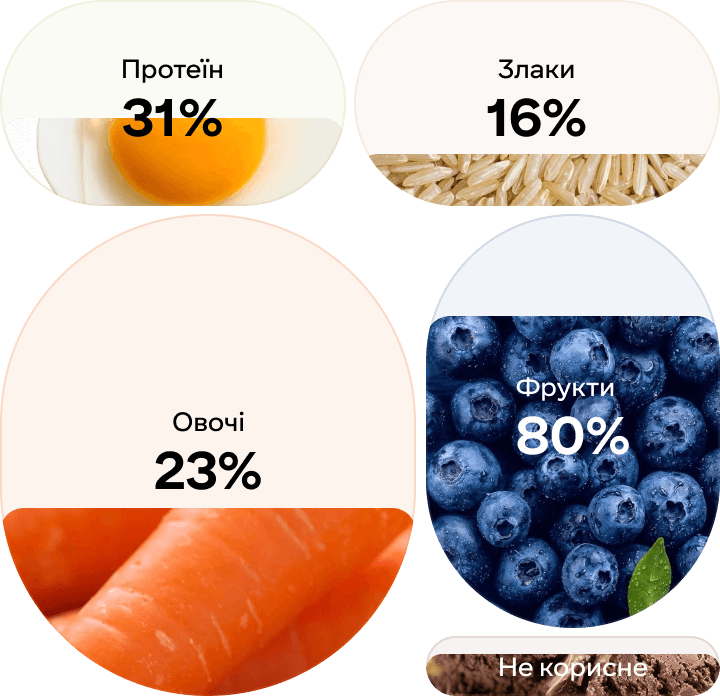
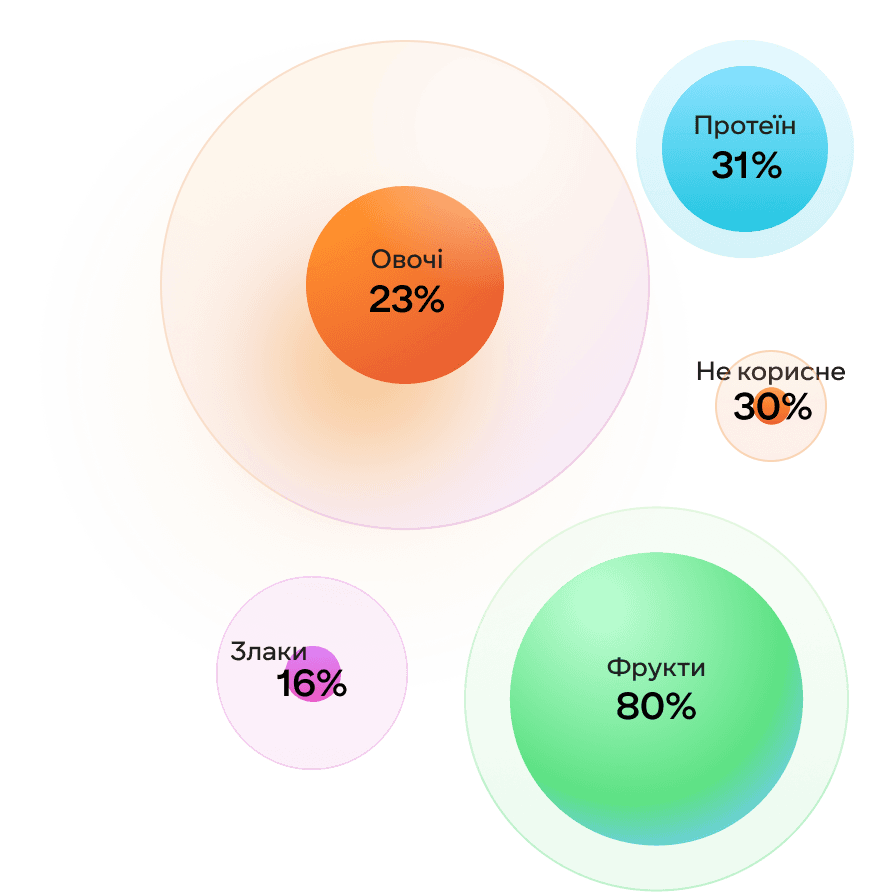
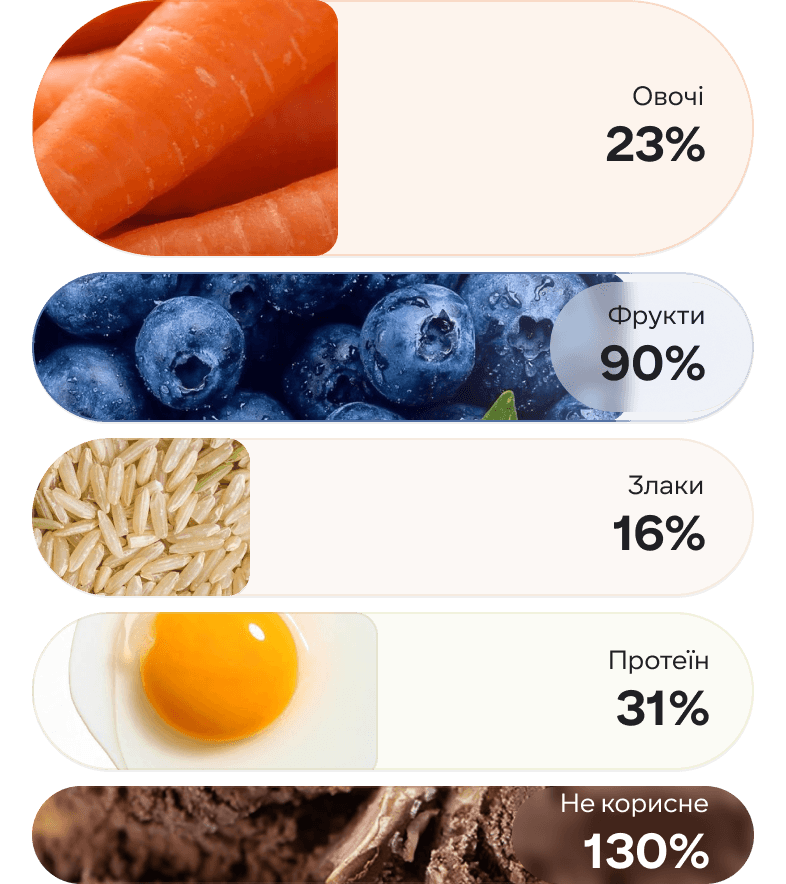
The best
Scaling
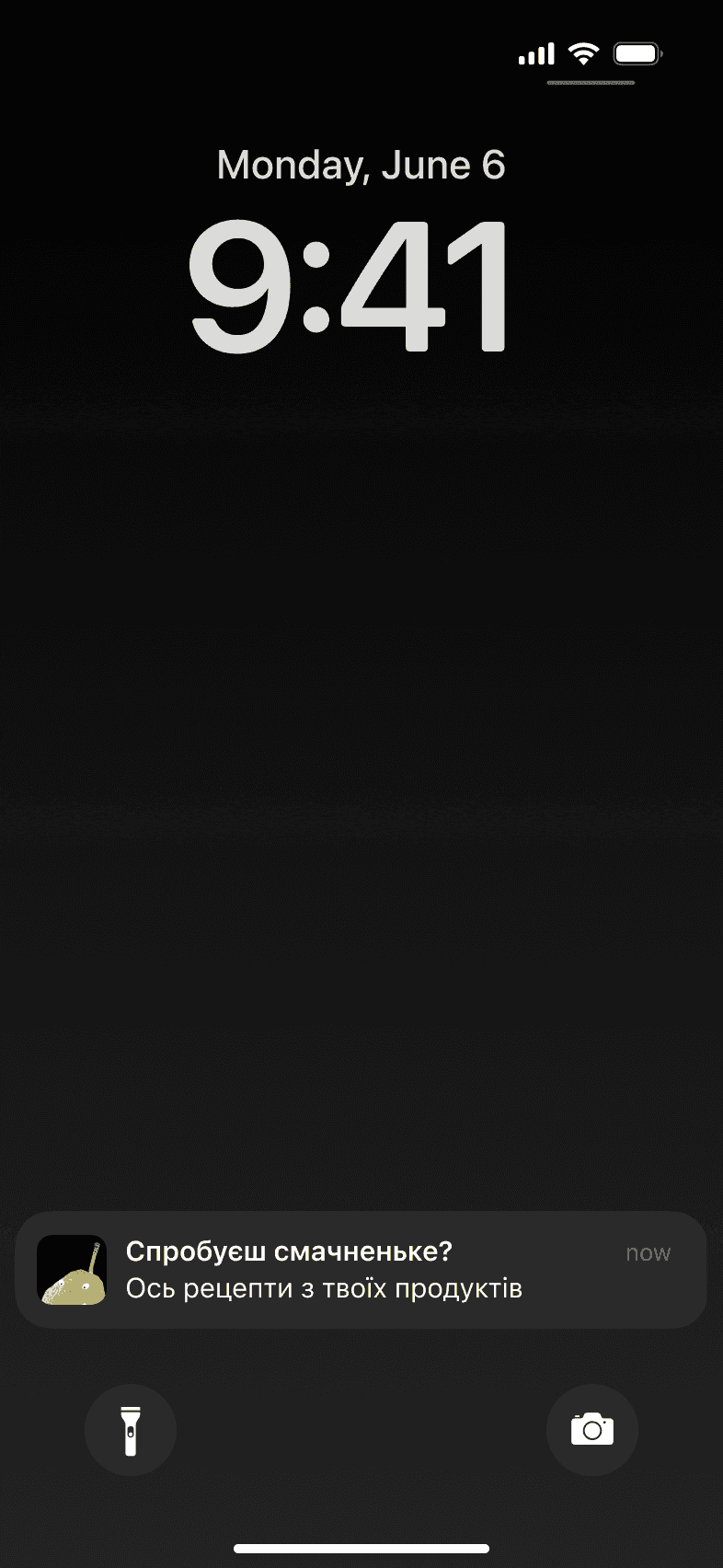
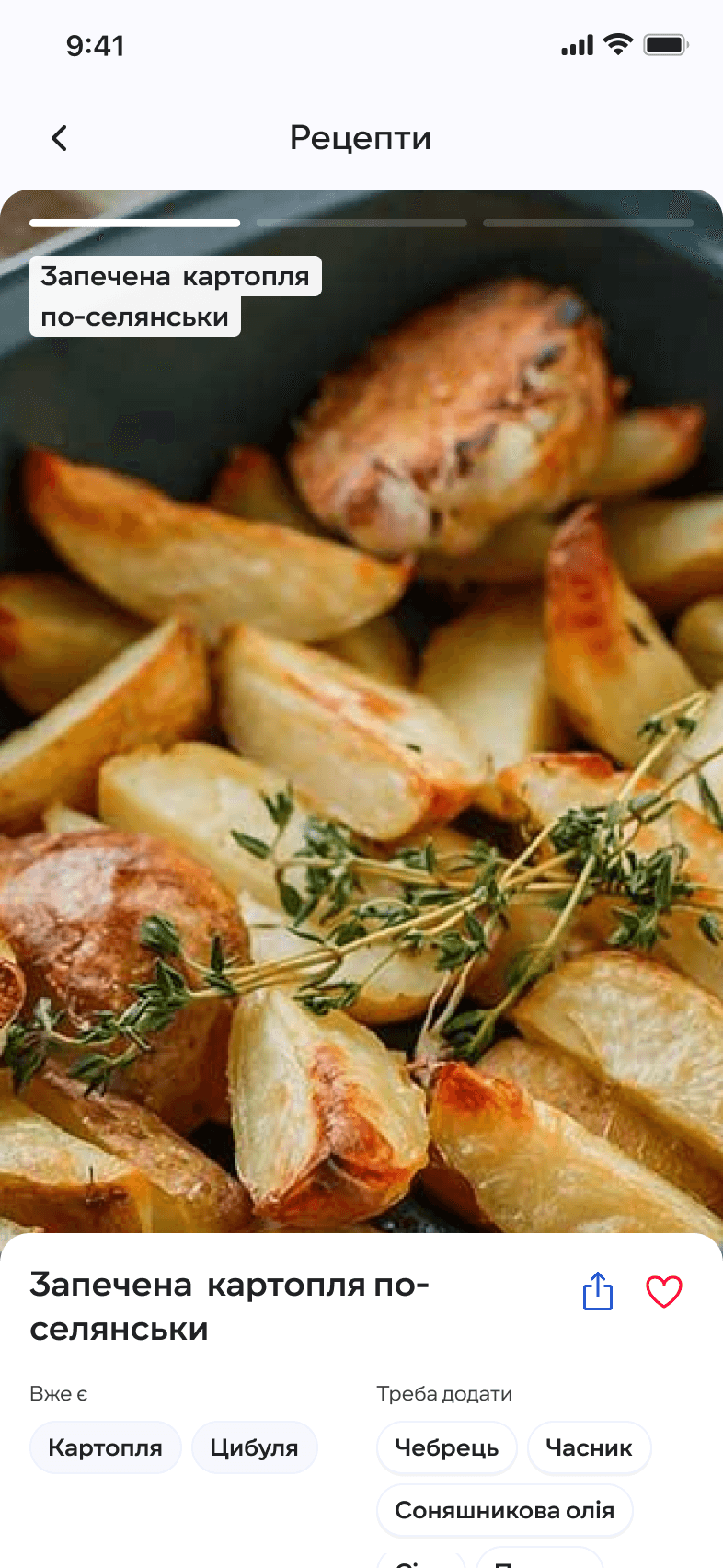
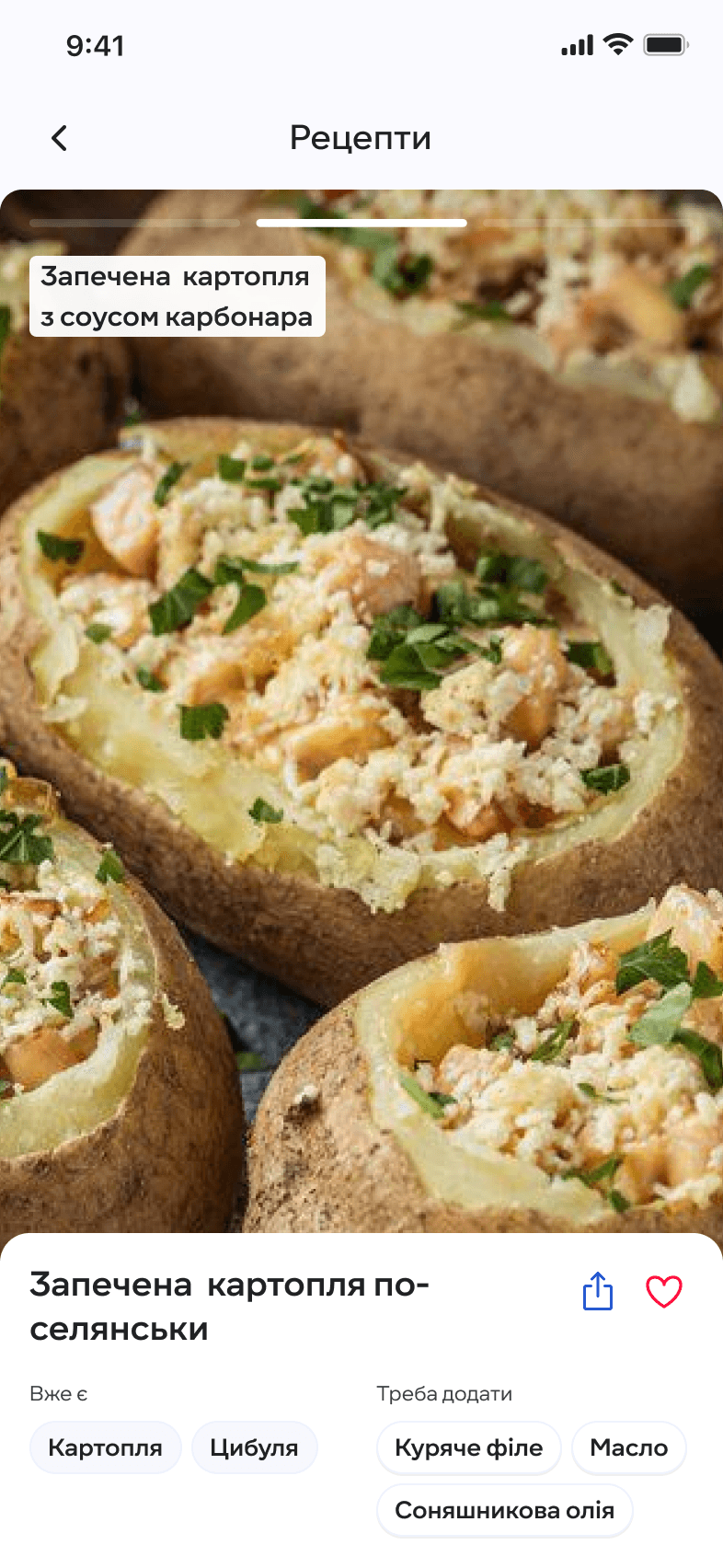
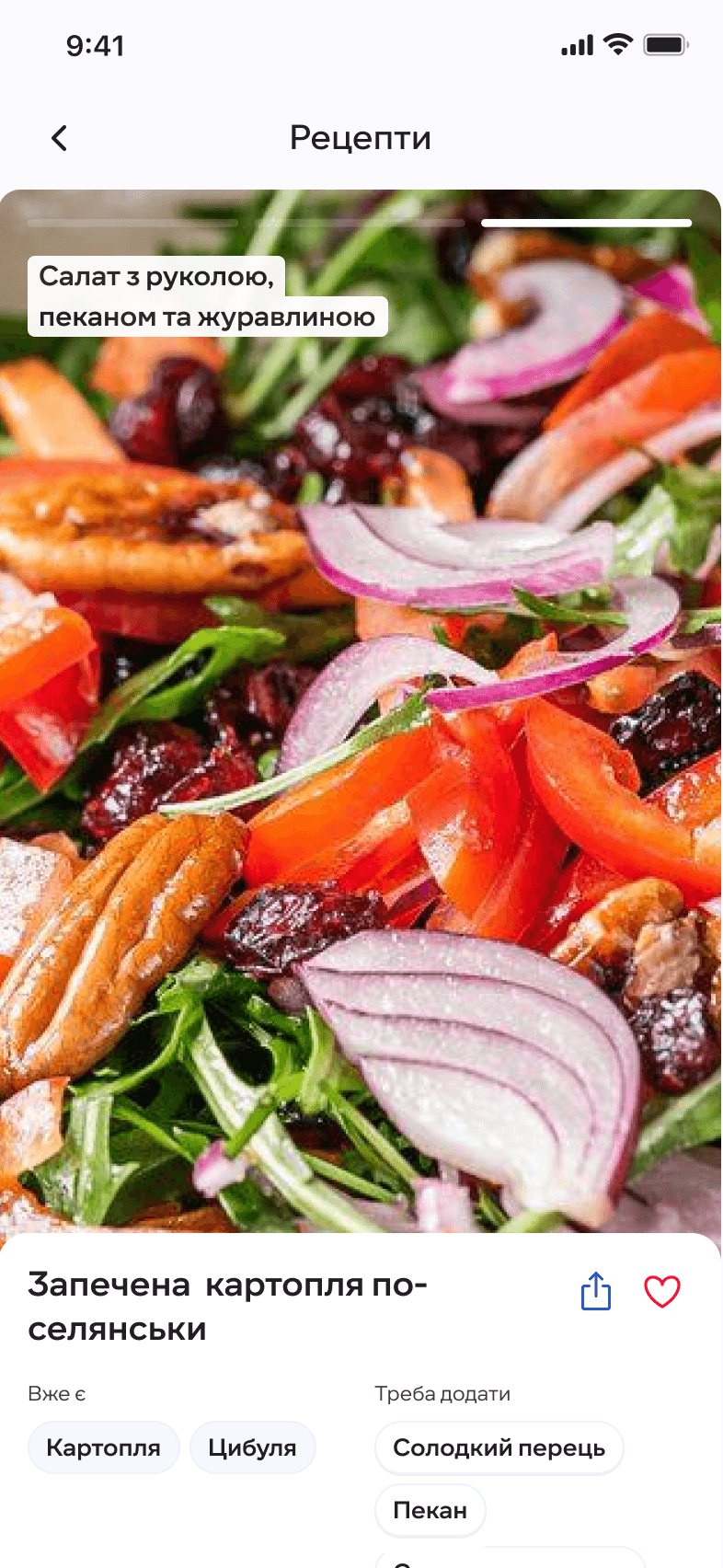
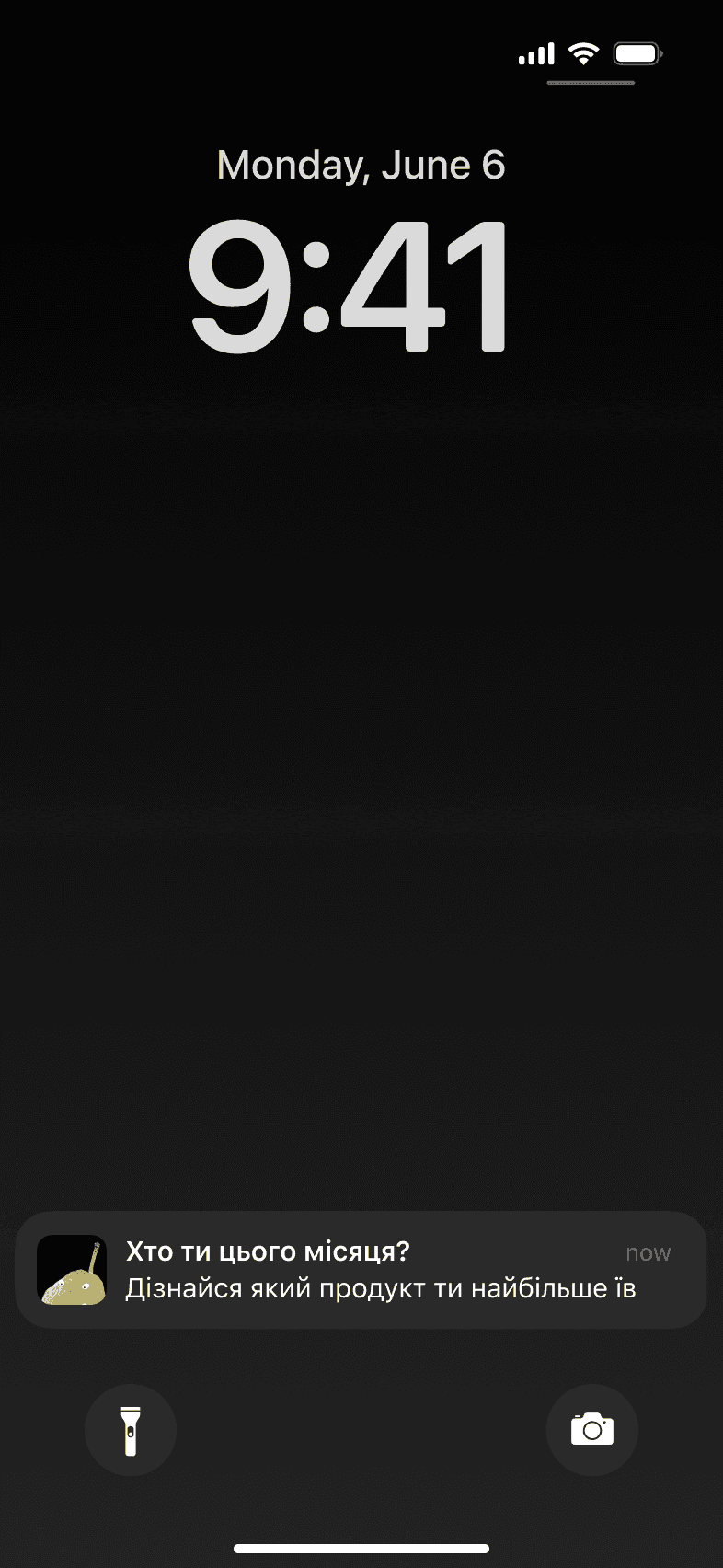


Silpo already has customers’ purchase history and profiles. That means there’s no need for a long onboarding process or manual food logging.
Most nutrition apps rely on manual food tracking. This concept doesn’t.





Higher retention: the feature could create another reason for guests to return to the app by helping them answer a frequent question: What should I buy?
Higher average order value.
New monetization opportunities.
Personalized meal plans.
Subscription to ready-made meals from a dark kitchen.
What if one day shopping at Silpo worked like this? You enter the store and tap your phone on a scanner. It automatically logs you into your account. You put products into your cart, walk out, and everything is paid for automatically.
Now imagine opening the Silpo app while you shop. It tracks what you’re adding to your cart in real time and gives you simple suggestions based on your habits: “Looks like you could use some more vegetables. How about cucumbers?”
Suddenly, this doesn’t feel like such a distant future anymore :)